Job posting untuk UX Designer turun hampir 30% dari puncaknya di 2021. Layoff di tech companies? Design teams kena duluan. Dan sekarang, tools AI seperti Lovable dan Bolt bisa generate full working app dari prompt dalam hitungan menit — bukan jam, bukan hari, tapi menit.
Sebagai founder BuildWithAngga yang berinteraksi dengan ribuan designer Indonesia setiap bulannya, gue melihat satu pattern yang jelas: banyak yang panik, banyak yang bingung, dan sayangnya — banyak yang denial.
"AI gak akan bisa gantiin kreativitas manusia."
"Design itu soal empathy, AI gak punya itu."
"Nanti juga hype-nya reda."
Gue paham sentiment itu. Tapi mari kita jujur — dunia sudah berubah, dan perubahan ini gak akan mundur.
Yang Berubah vs Yang Tetap Valuable
Ini yang perlu kamu pahami tentang kondisi industri 2025-2026:
Yang BERUBAH (dan gak bisa di-ignore):
Pertama, job market jadi jauh lebih kompetitif. Bukan cuma bersaing dengan designer lain, tapi juga dengan designer yang sudah leverage AI untuk output 5x lebih banyak.
Kedua, AI sekarang bisa generate UI dalam hitungan detik. Tools seperti Galileo AI bisa bikin high-fidelity mockup dari text prompt. v0 by Vercel bisa convert screenshot jadi React component. Lovable bisa ubah Figma design jadi full working app.
Ketiga, companies expect lebih dari designers. Bukan cuma "bikin yang cantik" — tapi deliver business impact, ship real products, dan contribute ke revenue.
Keempat, traditional skills saja tidak lagi cukup. Bisa Figma? Great, tapi semua orang juga bisa. Paham design principles? Bagus, tapi itu baseline, bukan differentiator.
Kelima, role "pixel pusher" — designer yang cuma eksekusi visual tanpa strategic thinking — increasingly terancam.
Yang TETAP Valuable (dan makin dicari):
Problem-solving mindset yang bisa identify root cause, bukan cuma symptoms. User empathy yang genuine — kemampuan untuk benar-benar understand user needs, bukan assume. Strategic thinking yang connect design decisions ke business outcomes. Business understanding yang bisa speak the language of stakeholders. Dan yang paling penting: ability to ship real products, bukan cuma mockups.
Shift Fundamental yang Harus Dipahami
Ada perubahan mendasar dalam ekspektasi terhadap designer:
Model Lama (yang gak cukup lagi):
Designer bikin mockup cantik di Figma. Handoff ke developer. Tunggu 2-3 minggu untuk build. Review, kasih feedback. Repeat. Cycle ini bisa memakan waktu berminggu-minggu untuk satu feature.
Model Baru (2026 expectation):
Designer bikin design, sekaligus prototype functional. Ship ke staging untuk testing. Iterate based on real user feedback. Measure impact. Improve. Cycle ini bisa terjadi dalam hitungan hari, bahkan jam.
Perbedaannya? Designer yang bisa SHIP real products akan jadi 10x lebih valuable dari yang cuma bisa bikin mockup cantik.
Dan kabar baiknya — tools untuk bisa ship sekarang accessible untuk semua orang. Kamu gak perlu jadi developer untuk bisa build dan deploy. Kamu cuma perlu mau belajar tools yang tepat.
Peluang di Balik Tantangan
Di balik semua "kabar buruk" tadi, ada peluang BESAR yang kebanyakan designer gak lihat:
71% UX professionals percaya AI akan shape the future of design. Tapi berapa banyak yang sudah benar-benar adopt AI tools ke workflow mereka? Minoritas. Ini artinya — kalau kamu mulai sekarang, kamu sudah ahead of the curve.
Template economy sedang booming. Designer seperti Hamza Ehsan menghasilkan lebih dari $200,000 dalam 19 bulan dari jualan Framer templates. Top creators di marketplace bisa earn $10,000+ per bulan dari passive income.
New job titles bermunculan: "AI UX Designer", "AI Product Designer", "Design Engineer". Roles yang combine design skill dengan AI proficiency dan technical understanding.
Companies masih butuh designers — tapi designer yang berbeda. Designer yang bisa think strategically, leverage AI, dan deliver measurable impact.
10 Hal yang Akan Kita Bahas
Artikel ini akan breakdown 10 hal yang perlu kamu pelajari untuk survive dan thrive di 2026:
- Paham dan Mahir Pakai AI Design Tools
- Kuasai No-Code (Framer, Webflow)
- Bangun Passive Income dari Templates
- Paham Basic Frontend (HTML, CSS, React basics)
- Design for AI Agents (Agentic UX)
- Business & Strategy Thinking
- Learn to Sell Your Work
- Build Personal Brand
- Diversify Income Streams
- Never Stop Learning (Continuous Evolution)
Ini bukan wishlist atau nice-to-have. Ini survival kit.
Mari kita mulai.
Hal #1: Paham dan Mahir Pakai AI Design Tools
Kalau kamu masih belum sentuh AI tools sama sekali di 2025, ini wake-up call: kompetitor kamu yang pakai AI bisa output 5x lebih banyak dari kamu dengan kualitas yang comparable.
Ini bukan soal AI menggantikan designer. Ini soal designer + AI versus designer tanpa AI. Dan guess who wins?
Realita Baru: AI sebagai Multiplier
Bayangkan dua designer dengan skill level yang sama:
Designer A bekerja dengan cara tradisional. Brainstorm ideas manual, sketch wireframes, build high-fidelity di Figma, present ke stakeholder, revisi, repeat. Untuk satu landing page, butuh 2-3 hari.
Designer B leverage AI tools. Gunakan ChatGPT untuk brainstorm 20 ideas dalam 10 menit. Generate quick mockups dengan Galileo AI untuk validation. Finalize di Figma dengan bantuan AI plugins. Convert ke working prototype dengan Lovable. Untuk satu landing page, butuh 3-4 jam.
Siapa yang lebih valuable di mata client atau employer?
Ini bukan cheating. Ini evolusi. Sama seperti designer 20 tahun lalu yang transition dari hand-drawing ke digital tools — yang adapt survive, yang resist tertinggal.
AI Tools yang WAJIB Dikuasai (Tier 1)
Ada tiga tools yang menurut gue absolutely mandatory untuk designer di 2026:
LOVABLE — Figma to Full Working App
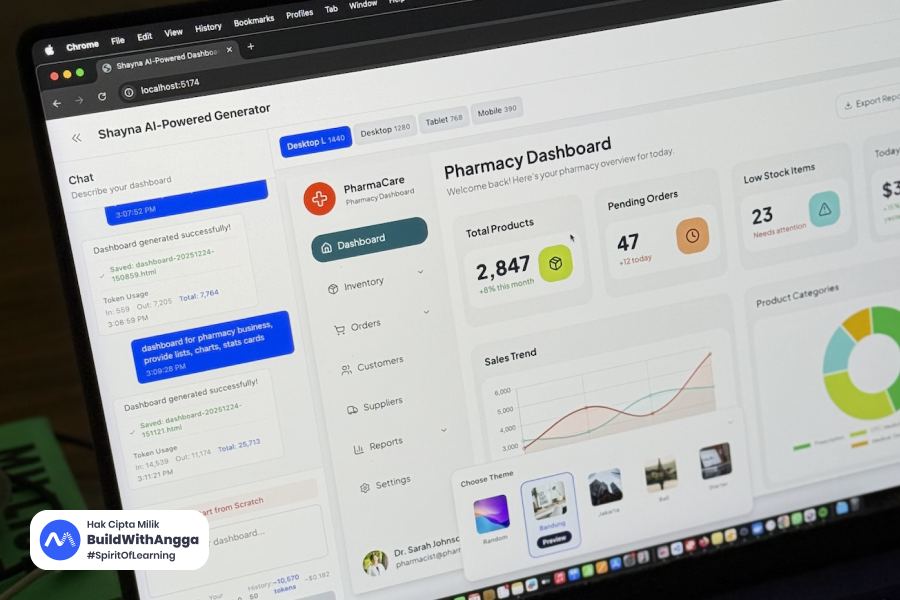
Lovable adalah game-changer. Kamu bisa import design dari Figma, describe apa yang kamu mau dalam natural language, dan AI akan generate full working application — complete dengan frontend, backend connection, dan deployment.
Ini bukan sekadar prototype. Ini production-ready code.
Use case paling common: "Saya punya design di Figma, mau jadi app beneran yang bisa di-test sama real users."
Pricing mulai dari free tier untuk experimenting, sampai $20-$100/month untuk serious usage.
Kenapa penting? Karena dengan Lovable, designer bisa skip dependency ke developer untuk prototyping. Kamu bisa validate ideas lebih cepat, iterate lebih frequent, dan deliver working products — bukan cuma mockups.
BOLT.NEW — Browser-Based AI Coding
Bolt.new dari StackBlitz memungkinkan kamu build web dan mobile apps langsung dari browser, dengan bantuan AI. Gak perlu setup development environment, gak perlu install dependencies — langsung kerja.
Yang powerful dari Bolt adalah kemampuannya untuk iterate cepat. Kamu describe apa yang mau diubah, AI langsung apply changes, dan kamu lihat hasilnya real-time.
Use case: "Saya mau prototype cepat untuk client pitch besok, gak ada waktu untuk coordination dengan developer."
Pricing mulai dari free dengan limitations, sampai $50-$200/month untuk heavy usage.
V0 BY VERCEL — Image to React Components
v0 adalah AI tool dari Vercel yang bisa convert screenshots atau mockups jadi clean React components. Ini especially powerful kalau kamu kerja dengan development team yang pakai React.
Kamu upload gambar atau describe UI yang kamu mau, v0 generate code dengan shadcn/ui components yang production-ready. Hasilnya bukan spaghetti code — tapi clean, maintainable, dan following best practices.
Use case: "Saya punya mockup di Figma, mau jadi React component yang bisa langsung di-integrate sama dev team."
Free tier available untuk mulai experimenting.
AI Tools Tambahan (Tier 2)
Selain tiga tools utama, ada beberapa yang sebaiknya kamu familiar:
Galileo AI untuk generate high-fidelity UI dari text descriptions. Berguna untuk ideation cepat ketika kamu butuh explore banyak directions dalam waktu singkat.
Midjourney atau DALL-E untuk generate custom images dan illustrations. Useful untuk hero images, backgrounds, atau visual assets yang unique.
ChatGPT atau Claude untuk UX copywriting, user research analysis, dan brainstorming. Gue personally pakai ini hampir setiap hari untuk berbagai tasks.
Relume untuk generate sitemaps dan wireframes dari brief. Membantu banget untuk initial planning phase di website projects.
Workflow AI-Assisted Design
Ini contoh workflow yang integrate AI tools ke design process:
Phase 1 — Ideation: Mulai dengan ChatGPT atau Claude untuk brainstorm solutions. Describe problem yang mau di-solve, minta AI generate multiple approaches. Dalam 15 menit, kamu bisa punya 10-20 ideas untuk di-evaluate. Lalu gunakan Galileo AI untuk quick visual mockups dari top 3-5 ideas. Ini untuk gut-check apakah direction-nya make sense secara visual.
Phase 2 — Design: Move ke Figma untuk high-fidelity design. Di stage ini, kamu masih pakai manual skills — composition, typography, color, spacing. AI assists, tapi creative direction tetap dari kamu. Gunakan AI-powered Figma plugins untuk generate variations, suggest improvements, atau create assets.
Phase 3 — Prototype: Ini where it gets interesting. Dengan Lovable atau Bolt, convert design kamu jadi functional prototype. Bukan clickable prototype yang fake — tapi real working app dengan actual interactions.
Phase 4 — Ship: Pakai v0 untuk generate clean React components yang bisa di-handoff ke development team. Atau kalau projectnya simple, deploy langsung dari Lovable.
Hasil akhir? Design to working product dalam HOURS, bukan WEEKS.
Mindset Shift yang Diperlukan
Ada satu mental block yang sering gue lihat: designer yang merasa "using AI is cheating" atau "it's not really my work."
Mari kita reframe ini.
Photographer yang pakai Photoshop bukan cheating — mereka leverage tools untuk enhance their vision. Musician yang pakai digital audio workstation bukan cheating — mereka use technology untuk create better music.
Designer yang pakai AI bukan cheating. They're using available tools untuk deliver better outcomes, faster.
AI bukan threat — AI adalah superpower. Designer yang menolak AI itu seperti photographer yang menolak digital camera di tahun 2005. You can resist, tapi eventually you'll be left behind.
Yang matters bukan whether you use AI, tapi what you create with it. AI gak punya taste. AI gak punya empathy. AI gak understand business context. Itu semua masih domain kamu sebagai designer.
AI just makes execution faster. The thinking is still yours.
Action Step untuk Minggu Ini
Jangan overwhelmed dengan semua tools. Mulai dari SATU dulu.
Rekomendasi gue: start dengan Lovable. Kenapa? Karena paling beginner-friendly dan immediate value-nya jelas — kamu bisa lihat design jadi working app.
Ini challenge untuk minggu ini:
Hari 1-2: Sign up Lovable, explore interface, watch tutorial videos mereka.
Hari 3-4: Pick satu simple project — bisa landing page atau simple dashboard. Build dari prompt.
Hari 5-7: Iterate. Experiment dengan different prompts. See what works, what doesn't.
Goal: Dalam satu minggu, kamu punya working prototype yang di-build dengan AI assistance.
Setelah comfortable dengan Lovable, baru expand ke Bolt dan v0. One tool at a time, master each before moving on.
Hal #2: Kuasai No-Code (Framer, Webflow)
Ini bukan optional lagi. Bukan "nice to have." Bukan "kalau sempat."
Di 2026, designer yang gak bisa build sama dengan designer yang butuh developer untuk semua hal — which means designer yang costly, slow, dan limited dalam value yang bisa di-deliver.
Kenapa No-Code Jadi Mandatory
Coba bayangkan dua scenario ini:
Scenario A — Designer Tanpa No-Code Skills:
Client: "Saya butuh landing page untuk product launch minggu depan."
Designer: "Baik, saya buatkan designnya. Estimasi 3 hari untuk design, lalu butuh developer untuk build. Total timeline sekitar 2-3 minggu, tergantung availability developer."
Client: internally frustrated "Okay..."
Scenario B — Designer Dengan No-Code Skills:
Client: "Saya butuh landing page untuk product launch minggu depan."
Designer: "Baik, saya buatkan design sekaligus build-nya. Estimasi 3-4 hari, sudah include revisi, dan langsung live di staging untuk review. Minggu depan ready publish."
Client: "Perfect, let's do it."
Siapa yang lebih likely dapat project? Siapa yang bisa charge lebih tinggi? Siapa yang client akan refer ke network mereka?
Jawaban untuk ketiga pertanyaan: Designer B.
Framer vs Webflow — Start dari Mana?
Dua platform no-code yang paling relevant untuk designer adalah Framer dan Webflow. Keduanya powerful, tapi dengan strengths yang berbeda.
FRAMER — Recommended untuk Designer yang Baru Mulai
Framer itu basically "Figma for websites." Interface-nya familiar, feels like design tool, dan learning curve-nya relatively gentle untuk designer.
Kelebihan utama Framer:
Interface yang mirip Figma membuat transisi smooth. Kamu gak perlu belajar paradigma baru — langsung apply skills yang sudah ada.
Figma import yang seamless. Kamu bisa bring designs dari Figma ke Framer dengan structure yang preserved. Copy-paste components just works.
Built-in animations yang smooth tanpa perlu coding. Hover effects, scroll animations, page transitions — semua visual dan intuitive.
AI features yang lebih advanced. Framer punya AI generation untuk create pages dari prompt, auto-generate variations, dan more.
Learning curve yang manageable. Most designers bisa productive dalam 1-2 minggu.
Kekurangan Framer:
CMS-nya masih terbatas compared to Webflow. Untuk complex content structures, bisa tricky.
No code export. Website harus di-host di Framer, gak bisa export raw code untuk self-hosting.
E-commerce capabilities limited. Kalau client butuh online store, Framer bukan best choice.
Best use cases untuk Framer: Portfolio websites, landing pages, marketing sites, simple company websites.
Pricing: Free untuk start, $15/month untuk custom domain dan basic features.
WEBFLOW — Untuk Designer yang Mau Go Deeper
Webflow lebih powerful dan flexible, tapi dengan learning curve yang lebih steep. Think of it as "visual coding" — kamu tetap design visually, tapi dengan control level yang mendekati actual development.
Kelebihan utama Webflow:
Full control seperti coding. Kamu bisa manipulate setiap aspect — flexbox, grid, custom CSS, interactions. Kalau bisa di-code, bisa di-build di Webflow.
CMS yang powerful. Content collections, relationships, dynamic filtering — bisa handle complex content structures dengan baik.
E-commerce built-in. Full-featured online store dengan product management, checkout, payments.
Code export available. Bisa export clean HTML/CSS/JS untuk client yang mau self-host.
SEO features lengkap. Meta tags, Open Graph, sitemap, redirects — semua accessible.
Kekurangan Webflow:
Learning curve lebih steep. Designer tanpa understanding of web concepts (box model, positioning, etc) akan struggle di awal.
Interface kurang designer-friendly. Feels more like a development tool than design tool.
More expensive. Pricing lebih tinggi, especially untuk CMS dan e-commerce features.
Best use cases untuk Webflow: Complex websites, blogs dengan banyak content, e-commerce stores, client sites yang butuh CMS robust.
Pricing: Free untuk learn, $29/month untuk professional features.
Recommended Learning Path
Jangan coba master keduanya sekaligus. Sequential approach works better:
Month 1-2: Focus on Framer
Week 1: Learn Framer basics. Interface, components, responsive design, basic interactions. Watch official tutorials, follow along dengan simple projects.
Week 2-3: Build your own portfolio site. Ini perfect first project karena kamu tau exactly apa yang dibutuhkan, dan hasilnya useful untuk career kamu.
Week 4-6: Take on 2-3 small client projects atau self-initiated projects. Landing pages, simple company sites. Goal: get comfortable dengan end-to-end workflow dari design ke publish.
Milestone di akhir Month 2: Kamu bisa confidently ship landing pages dan simple websites dengan Framer.
Month 3-4: Add Webflow
Week 1-2: Learn Webflow fundamentals. Box model, flexbox, grid, CMS basics. Expect ini lebih challenging than Framer.
Week 3-4: Build a site dengan blog atau portfolio menggunakan CMS. Understand dynamic content, collections, filtering.
Week 5-6: Explore e-commerce basics. Even kalau kamu gak fokus di e-commerce, understanding-nya valuable.
Milestone di akhir Month 4: Kamu bisa handle lebih complex websites, including sites dengan CMS dan dynamic content.
Month 5+: Specialize
Setelah familiar dengan keduanya, pilih satu untuk di-specialize.
Kalau kamu lebih enjoy design-forward work, quick turnaround, dan clean aesthetic: specialize di Framer. Build reputation sebagai "Framer expert."
Kalau kamu lebih enjoy complex builds, e-commerce, dan technical challenges: specialize di Webflow. Position yourself untuk higher-value projects.
Specialization memungkinkan kamu charge premium karena expertise yang deep, bukan generalist yang surface-level.
Income Impact: Numbers Don't Lie
Let's talk real numbers — karena at the end of the day, skills harus translate ke income.
Designer Tanpa No-Code Skills:
Bisa offer ke client: Design only (Figma files)
Deliverable: Static mockups, prototype links
Typical project value: Rp 3-5 juta untuk website design
Client experience: "Bagus designnya, tapi kapan bisa live? Oh harus cari developer dulu..."
Designer Dengan No-Code Skills:
Bisa offer ke client: Design + Build + Deploy
Deliverable: Live website, ready to publish
Typical project value: Rp 8-15 juta untuk website (design + build)
Client experience: "Wow, sudah jadi! Tinggal isi content dan publish."
The difference? 2-3x income potential dari essentially the same amount of work.
Bahkan lebih powerful: designer dengan no-code skills bisa take on projects yang sebelumnya "too small" untuk involving developer. Simple landing page project yang cuma Rp 5 juta? Not worth it kalau harus split dengan developer. Tapi kalau kamu bisa handle sendiri? That's pure profit dan bisa selesai dalam 2-3 hari.
Volume potential-nya jadi jauh lebih tinggi.
Common Objections (dan Counterarguments)
"Tapi saya designer, bukan developer."
Dan kamu tetap designer. No-code bukan coding. Kamu gak perlu understand programming concepts yang deep. Kamu design visually, platform handles the code. Think of it as extension dari design tools, bukan completely different discipline.
"Learning curve-nya steep, gak ada waktu."
Framer learning curve itu surprisingly gentle kalau kamu sudah familiar dengan Figma. Most designers bisa productive dalam 1-2 minggu dengan dedicated learning. That's nothing compared to career-long benefit.
"Client saya pasti mau WordPress karena mereka familiar."
Fair point untuk some clients. Tapi increasingly, clients care about results — bukan platform. "Website saya cepat, mudah di-edit, dan looks great" lebih penting dari "website saya pakai WordPress." Plus, kamu bisa always offer both dan let client choose.
"Nanti jadi jack of all trades, master of none."
Actually, designer yang bisa build jadi MORE valuable specialist, bukan generalist. Kamu master at delivering complete solutions, bukan half-solutions yang butuh orang lain untuk complete.
Action Step untuk Bulan Ini
Download Framer dan start free account. Don't overthink, just start.
Project pertama: Rebuild homepage portfolio kamu di Framer. Kenapa ini good first project? Kamu already punya reference (current portfolio), kamu tau apa content-nya, dan output-nya immediately useful.
Set deadline: 2 minggu untuk first version live.
Gak harus perfect. Gak harus semua features. Just ship something. You'll iterate and improve from there.
Learning by building real projects beats watching tutorials tanpa applying. Every time.
Artikel berlanjut ke Hal #3: Bangun Passive Income dari Templates...
Mini Tips Sejauh Ini:
💡 Tips #1: "Mulai dari SATU AI tool dulu. Gue recommend Lovable karena paling beginner-friendly. Spend 1 minggu, bikin 3 mini projects. Baru expand ke tools lain."
💡 Tips #2: "Start dengan Framer. Interface-nya mirip Figma, jadi transisi smooth. Build portfolio kamu dulu di Framer — sekalian belajar sambil bikin sesuatu yang useful."
Hal #3: Bangun Passive Income dari Templates
Ini yang paling exciting menurut gue. Dan honestly, ini game-changer untuk designer yang mau keluar dari trap "tukar waktu dengan uang."
Designer sekarang bisa bangun passive income dengan jualan templates — tanpa perlu hunting client terus-terusan, tanpa perlu meeting calls yang melelahkan, tanpa perlu revisi tanpa akhir.
Create once, sell forever. That's the dream, dan sekarang itu achievable.
Template Economy: Realita 2025-2026
Sebelum kita bahas how-to, let's look at the numbers dulu. Karena gue tau banyak yang skeptis — "emang bisa sebesar itu?"
Bisa. Dan ini bukan hype.
Hamza Ehsan, seorang designer yang fokus di Framer templates, menghasilkan lebih dari $200,000 dalam 19 bulan. Itu sekitar Rp 3.2 miliar. Dari templates. Bukan client work, bukan full-time job — templates.
Top creators di Framer Marketplace consistently earn $10,000+ per bulan. Di UI8, top sellers bisa reach $5,000-$20,000 per bulan. Figma Community juga punya success stories dengan steady passive income.
Pattern-nya sama: create high-quality templates, list di marketplace, let the platform bring buyers, earn while you sleep.
Apakah semua orang bisa dapat numbers seperti itu? Tentu tidak. Tapi apakah designer Indonesia bisa realistically earn Rp 5-15 juta per bulan dari templates sebagai additional income stream? Absolutely yes.
Marketplace Options untuk Jualan Templates
Ada beberapa platform yang bisa kamu gunakan:
Framer Marketplace — Growing rapidly, especially untuk website templates. Audience-nya designers dan founders yang mau website cepat tanpa coding. Competition makin ketat, tapi demand juga growing.
UI8 — Established marketplace dengan premium positioning. Buyers expect higher quality, tapi juga willing to pay more. Good untuk comprehensive UI kits dan design systems.
Creative Market — Huge audience, diverse products. Bisa jual berbagai jenis assets — templates, icons, fonts, mockups. Lower price point tapi high volume potential.
Gumroad — Direct to customer, no middleman approval process. You keep larger percentage, tapi harus bring your own traffic. Good kalau kamu sudah punya audience.
Figma Community — Mix of free dan paid. Good untuk build reputation dan funnel ke paid products.
Rekomendasi untuk starting: Framer Marketplace atau UI8. Established audiences, clear quality standards, dan proven demand.
Jenis Templates yang Laku di 2026
Gak semua template sama demand-nya. Ini yang consistently perform well:
SaaS Landing Pages — Price: $49-$149
Target audience: Startup founders, indie hackers, SaaS companies. Mereka butuh professional landing page cepat untuk launch atau test ideas. High demand karena SaaS boom continues.
Apa yang harus di-include: Hero section dengan clear value prop, features section, pricing table, testimonials, FAQ, CTA sections. Bonus: dark mode version, multiple hero variations.
Portfolio Templates — Price: $29-$79
Target audience: Designers, developers, photographers, creatives. Everyone needs portfolio, dan banyak yang gak mau spend waktu build from scratch.
Apa yang harus di-include: Clean project showcase, about section, contact, optional blog. Bonus: multiple layout options, easy customization.
Agency/Studio Websites — Price: $79-$199
Target audience: Design agencies, development studios, creative shops. They want professional presence tanpa dedicating designer time untuk internal project.
Apa yang harus di-include: Services section, case studies layout, team page, contact. Bonus: CMS integration untuk case studies.
Dashboard UI Kits — Price: $39-$99
Target audience: Developers, product managers, startups building internal tools. Growing demand karena every company butuh admin panels dan dashboards.
Apa yang harus di-include: Multiple page templates (overview, tables, forms, settings), component library, chart variations. Bonus: dark mode, multiple color schemes.
E-commerce/Product Pages — Price: $49-$129
Target audience: Small business owners, indie brands, dropshippers. Online selling terus grow, dan mereka butuh professional product pages.
Apa yang harus di-include: Product showcase, gallery, reviews section, related products. Bonus: collection pages, cart designs.
Mobile App UI Kits — Price: $49-$149
Target audience: App developers, startups, agencies. Mobile-first world means constant demand untuk app UI resources.
Apa yang harus di-include: Core screens (onboarding, home, profile, settings), common patterns (lists, cards, forms), icons set. Bonus: multiple app categories (finance, health, social).
Step-by-Step: Dari Nol sampai First Sale
Okay, enough theory. Here's the practical roadmap:
Phase 1: Research (Week 1-2)
Jangan langsung bikin. Research dulu.
Browse Framer Marketplace, UI8, Creative Market. Lihat apa yang trending, apa yang consistently di-featured. Perhatikan yang bestseller — apa yang bikin mereka standout? Design quality? Comprehensiveness? Unique angle?
Identify gaps. Apa yang belum ada atau underserved? Mungkin ada niche industry yang kurang templates. Mungkin ada style yang belum banyak di-explore.
Study top sellers in-depth. Download preview images, baca descriptions, check reviews. Understand what makes them successful. Ini bukan untuk copy — tapi untuk understand standards dan expectations.
Pick your niche. SaaS? Portfolio? Agency? E-commerce? Pick one untuk focus. Better to be known for one thing than forgettable untuk everything.
Validate demand. Before investing weeks building, make sure ada market. Check: apakah similar templates ada dan selling? Kalau iya, demand confirmed. Kalau gak ada sama sekali, either untapped opportunity atau no demand — research more.
Phase 2: Create (Week 3-6)
Sekarang build.
Focus on ONE high-quality template. Resist temptation untuk bikin banyak sekaligus. One great template beats 10 mediocre ones.
Quality checklist yang harus di-hit:
Design excellence — Clean, modern, professional. Details matter. Spacing consistent, typography polished, colors harmonious. Ini bukan tempat untuk "good enough."
Easy customization — Buyers mau plug and play. Use variables untuk colors, organized layers, clear naming conventions. Kalau susah di-customize, expect bad reviews.
Comprehensive documentation — How to use, how to customize, what fonts used, etc. Good docs reduce support requests dan increase buyer satisfaction.
Multiple pages/sections — More value = justified higher price. Landing page template dengan 1 hero variation? Meh. Landing page dengan 5 hero options, 3 feature layouts, 2 pricing styles, plus additional pages? Now we're talking.
Responsive design — Must work on desktop, tablet, mobile. Non-negotiable.
Performance optimized — Fast loading, optimized images, clean code (for Webflow/coded templates).
Test everything. Click every link, check every responsive breakpoint, validate every component. Ship something polished, bukan something embarrassing.
Phase 3: Launch (Week 7-8)
Preparation for listing:
Create compelling preview images. Ini yang buyers lihat first. Invest time untuk create mockups yang showcase template at its best. Show multiple views, highlight features, make it look premium.
Write clear description. What's included, who it's for, key features, tech specs. Don't be vague. Buyers mau tau exactly what they're getting.
Set strategic pricing. More on this below. Don't underprice yourself, tapi juga be realistic untuk first product.
Prepare support documentation. FAQ, customization guide, contact info. Reduce friction for buyers.
Submit and wait for approval (for marketplaces dengan review process). Use this time untuk prepare marketing.
Phase 4: Market (Ongoing)
Getting listed is not enough. You need to promote.
Share di Twitter/X dengan behind-the-scenes content. Show your process, celebrate launch, engage dengan design community.
Post di LinkedIn untuk professional reach. Design leads dan product managers browse LinkedIn.
Create demo video showing template in action. Video converts better than static images for complex products.
Reach out untuk review/feature. Design blogs, newsletters, influencers. Getting featured = massive visibility boost.
Collect dan showcase testimonials. Social proof matters. Early buyers yang happy, ask them untuk review.
Build email list untuk future launches. Every buyer adalah potential repeat customer.
Phase 5: Scale (Month 3+)
Once first template profitable:
Create more templates. Expand collection. More products = more chances untuk discovery = more sales.
Build template bundles. Package related templates together untuk higher AOV (average order value). "Buy 3 templates, save 30%."
Consider premium tier. Once you have reputation, launch higher-priced comprehensive products.
Build own website untuk direct sales. Keep 100% profit instead of marketplace fees. Use Gumroad atau own e-commerce.
Create subscription model. Monthly/yearly access ke all templates. Predictable recurring revenue.
Pricing Strategy yang Make Sense
Pricing itu tricky. Too low = undervalue yourself dan attract wrong customers. Too high = price out potential buyers sebelum you have reputation.
Here's framework yang bisa dipakai:
Starter Tier ($29-$49) — Build reputation phase
Goal: Get sales, collect reviews, build credibility. At this price point, buying decision easier. You want volume untuk social proof.
When to use: First 1-3 products. Establishing yourself di marketplace. Products yang simpler atau narrower in scope.
Standard Tier ($49-$99) — Established creator
Goal: Balance volume dan profit. This is sweet spot untuk most templates.
When to use: After you have some sales dan reviews. Products dengan comprehensive features. Your "main" product line.
Premium Tier ($99-$199+) — Expert positioning
Goal: Higher margin, position sebagai premium option. Lower volume, but each sale lebih meaningful.
When to use: When you have strong reputation. For comprehensive UI kits atau design systems. Products yang clearly superior in quality atau completeness.
Bundle Tier ($199-$499) — Maximize value
Goal: Higher average order value. Give buyers more, charge more.
Structure: 3-5 related templates bundled with discount. "Complete Agency Bundle" atau "SaaS Starter Pack."
Common Mistakes to Avoid
Mistake #1: Starting without research
"Gue bikin apa yang gue suka" tanpa validating market demand. Result: Beautiful template yang nobody buys.
Mistake #2: Rushing quality
"Ship fast, fix later." Di marketplace, first impression adalah everything. Bad reviews early akan kill your product.
Mistake #3: Poor presentation
Great template dengan bad preview images = no sales. Buyers judge book by cover. Invest in presentation.
Mistake #4: Pricing too low
"Nanti gue naikin kalau sudah laku." Problem: low price attracts price-sensitive buyers yang demanding. Hard to raise price later. Start reasonable.
Mistake #5: No marketing
"List di marketplace, tunggu orang datang." Marketplace bukan magic. You need to actively promote, especially early on.
Mistake #6: One and done
"Sudah bikin satu template, sekarang tunggu passive income." One template itu fragile. Build collection untuk sustainable income.
Mini Tips #3
"Jangan bikin template random. Research dulu. Lihat apa yang laku, apa yang kurang, baru bikin sesuatu yang better. One great template > 10 mediocre templates."
Hal #4: Paham Basic Frontend (HTML, CSS, React Basics)
"Tapi kan gue designer, bukan developer?"
Gue denger ini sering banget. Dan response gue selalu sama: kamu gak perlu jadi developer, tapi kamu harus PAHAM basics.
Kenapa? Karena di era AI tools, kamu akan sering dealing dengan code — reviewing AI output, tweaking results, communicating dengan developers. Tanpa basic understanding, kamu akan terbatas.
Kenapa Designer Perlu Paham Code (Sedikit)
Ini situasi yang increasingly common:
Kamu pakai Lovable atau Bolt untuk generate dashboard. AI produces React components dengan Tailwind CSS. Hasilnya 90% bagus, tapi spacing di beberapa tempat aneh, dan satu button gak responsive properly.
Designer tanpa code knowledge:
"Umm... looks mostly good I guess? Bisa minta AI fix?"
Proceeds to describe problem vaguely
AI misunderstands, makes wrong changes
Back and forth 5 iterations
Finally gives up atau ships dengan issues
Designer dengan code knowledge:
"Oh, ini padding-nya hardcoded 24px, harusnya responsive. Dan button ini missing media query untuk mobile."
Opens code, changes p-6 to p-4 md:p-6
Adds w-full md:w-auto to button
Done in 2 minutes
Perbedaannya? Efficiency dan quality output.
Ini bukan soal jadi full-stack developer. Ini soal having enough understanding untuk be effective dengan AI tools dan communicate precisely dengan development team.
Minimum Viable Frontend Knowledge
Kamu gak perlu master everything. Here's what actually matters untuk designer:
Level 1: HTML Basics (1-2 minggu learning)
Apa yang perlu dipahami:
Semantic elements — Tau bedanya <header>, <nav>, <main>, <section>, <footer>. Kenapa matters? Accessibility dan SEO. Plus, AI tools use semantic HTML, dan kamu perlu tau apakah output-nya make sense.
Basic structure — Gimana HTML document structured. <head> vs <body>. Nesting elements. Parent-child relationships.
Forms dan inputs — <input>, <button>, <select>, <textarea>. Types of inputs. Labels dan accessibility.
Links dan images — <a> tags, <img> tags, attributes seperti href, src, alt.
Goal: Bisa baca HTML dan understand structure. Bisa identify kalau something wrong dengan markup.
Level 2: CSS Basics (2-3 minggu learning)
Apa yang perlu dipahami:
Box model — Content, padding, border, margin. Ini fundamental untuk understand spacing. Kalau design kamu selalu "off" when implemented, mungkin box model understanding yang kurang.
Flexbox — Modern layout system. display: flex, justify-content, align-items, flex-direction, gap. Ini used everywhere.
Grid — For more complex layouts. display: grid, grid-template-columns, grid-gap. Complementary to flexbox.
Responsive design — Media queries, breakpoints, mobile-first approach. Understand gimana styles change across screen sizes.
Common properties — color, background, font-size, font-weight, border-radius, box-shadow. The everyday stuff.
Goal: Bisa read CSS dan understand what it does. Bisa make small adjustments. Bisa communicate precisely dengan developers tentang styling.
Level 3: Tailwind CSS (1-2 minggu learning)
Kenapa Tailwind specifically? Karena almost semua AI tools (Lovable, Bolt, v0, Framer exports) generate Tailwind CSS. It's become industry standard untuk AI-generated code.
Apa yang perlu dipahami:
Utility class concept — Instead of writing CSS, you apply utility classes directly. p-4 = padding 1rem. text-center = text-align center. bg-blue-500 = background blue.
Spacing scale — Tailwind uses 4px base. p-1 = 4px, p-2 = 8px, p-4 = 16px, etc. Understand the scale.
Responsive prefixes — md:, lg:, xl: prefixes untuk different breakpoints. md:text-lg = large text pada medium screens and up.
Common utilities — Spacing (m-, p-), sizing (w-, h-), colors (text-, bg-), typography (text-, font-), flexbox (flex, items-, justify-).
Goal: Bisa read Tailwind code dan understand styling. Bisa tweak Tailwind classes untuk adjust designs. This is probably the highest-ROI skill untuk designer yang work dengan AI tools.
Level 4: React Basics (2-4 minggu learning) — Optional tapi Valuable
React itu lebih advanced dan optional. Tapi increasingly valuable karena banyak AI tools output React components.
Apa yang perlu dipahami (basic):
Component concept — UI broken into reusable pieces. A Button component, a Card component, etc.
Props — Data passed to components. <Button text="Click me" color="blue" />
State — Data yang berubah over time. Click counter, form input values, etc.
Basic hooks — useState untuk state management. useEffect untuk side effects.
Goal: Bisa read React code dan understand flow. Bisa make simple modifications. Understand component structure yang AI generates.
Learning Path yang Realistic
Total time investment: 2-3 bulan dengan casual learning (1-2 jam per hari).
Tapi kamu gak harus complete semua before being productive. Start applying immediately.
Week 1-2: HTML Basics
Resources: freeCodeCamp HTML course (free, interactive), MDN Web Docs for reference.
Practice: Inspect websites you like. Look at HTML structure. Try recreating simple pages.
Week 3-5: CSS Basics
Resources: freeCodeCamp CSS course, Kevin Powell YouTube (excellent CSS teacher).
Practice: Style your HTML pages. Experiment dengan flexbox dan grid. Build simple components.
Week 6-7: Tailwind CSS
Resources: Official Tailwind docs (excellent), Tailwind Labs YouTube.
Practice: Rebuild previous projects using Tailwind instead of regular CSS. Use Tailwind Play untuk experiment.
Week 8-12: React Basics (optional)
Resources: Official React docs (recently revamped, excellent), Fireship YouTube untuk quick overviews, Scrimba for interactive learning.
Practice: Build simple components. Todo list, simple dashboard layout. Focus on reading dan understanding, bukan complex apps.
Practical Application: Working dengan AI Tools
Here's where it becomes practical.
Scenario: Kamu generate a landing page dengan Bolt. Output bagus, tapi:
- Hero text terlalu besar di mobile
- Button spacing inconsistent
- Footer links tidak aligned properly
Tanpa code knowledge:
Kamu harus describe issues ke AI, hope AI understands, iterate multiple times. Frustrating dan time-consuming.
Dengan code knowledge:
Kamu identify issues di code:
// Hero text - change responsive sizing
dari: text-6xl
ke: text-3xl md:text-4xl lg:text-6xl

// Button spacing - fix gap
dari: space-x-2
ke: space-x-4 md:space-x-6

// Footer - add flexbox alignment
dari: <div class="footer-links">
ke: <div class="footer-links flex items-center gap-4">
Langsung fix, no back-and-forth. Time saved: potentially hours over course of project.
You Don't Need to Become a Developer
Let me be super clear: goal-nya bukan jadi developer.
Goal-nya adalah:
- Understand apa yang AI generate — Is the code sensible? Is structure correct?
- Communicate precisely dengan developers — "The margin-top on line 45 should be responsive" vs "spacing looks off somewhere"
- Make small tweaks yourself — Quick fixes tanpa waiting for developer atau fighting with AI
- Be more effective dengan AI tools — Better prompts, faster iterations, higher quality output
Think of it like this: chef gak perlu jadi farmer untuk understand ingredients. Tapi chef yang understand basics of agriculture — growing seasons, soil quality, freshness indicators — will make better decisions.
Designer gak perlu jadi developer. Tapi designer yang understand basics of frontend will make better design decisions dan be more effective dalam modern workflow.
Mini Tips #4
"Fokus di Tailwind CSS dulu. Almost semua AI tools (Lovable, Bolt, v0, Shayna) generate Tailwind code. Kalau kamu paham Tailwind, kamu bisa tweak output AI dengan mudah — dan itu immediately valuable."
Hal #5: Design for AI Agents (Agentic UX)
Ini topik yang masih jarang dibahas di Indonesia. Tapi trust me — ini akan jadi HUGE di 2026 dan beyond.
Selama ini kita design untuk humans. Users yang click, scroll, tap, type. Tapi sekarang ada "user" baru: AI agents.
Dan kalau kamu mulai paham ini sekarang, kamu akan ahead of 95% designer lainnya.
Apa Itu Agentic UX?
Coba bayangkan flow tradisional:
User (manusia) membuka app → Navigate interface → Click buttons → Complete task
Ini yang kita design selama ini. Interface untuk manusia.
Sekarang bayangkan flow baru yang makin common:
User bilang ke AI assistant: "Tolong booking restaurant buat dinner besok, yang Italian, budget 500rb per orang"
AI agent → Access restaurant apps → Browse options → Check availability → Make reservation → Report back ke user
Siapa yang actually interact dengan interface? AI agent.
Ini yang disebut Agentic UX — designing experiences bukan cuma untuk humans, tapi juga untuk AI agents yang act on behalf of humans.
Contoh Nyata yang Sudah Happening
Ini bukan future speculation. Ini already happening:
ChatGPT Plugins & GPT Actions
OpenAI memungkinkan third-party apps di-access oleh ChatGPT. User bisa bilang "book me a flight to Bali" dan ChatGPT akan interact dengan Expedia atau Kayak untuk execute.
Interface yang kita design? Akan di-access oleh AI, bukan langsung oleh human.
AI Browsing Agents
Tools seperti Perplexity, dan berbagai AI browser extensions bisa navigate websites, extract information, dan perform actions. Mereka "see" dan interact dengan UI yang kita design.
Voice Assistants Evolution
Siri, Google Assistant, Alexa — makin sophisticated. Mereka gak cuma answer questions, tapi execute tasks yang require interacting dengan multiple apps dan services.
Automated Workflows
Tools seperti Zapier, Make, dan n8n sekarang punya AI components. Workflows yang automatically interact dengan berbagai interfaces based on triggers.
Kenapa Designer Perlu Peduli?
Karena kalau interface kamu gak AI-friendly, beberapa hal akan terjadi:
Problem 1: Exclusion dari AI ecosystem
AI agents akan struggle atau fail interact dengan interface kamu. Artinya users yang prefer AI-first interaction akan skip service kamu sama sekali.
Contoh: Restaurant A punya website yang AI-agent friendly. Restaurant B punya website yang AI struggle to parse. Ketika user bilang ke AI "find me a good Italian restaurant and book a table" — guess which one AI akan recommend dan book?
Problem 2: Poor automated experience
Bahkan kalau AI bisa interact, hasilnya mungkin suboptimal. Wrong data extracted, incorrect actions taken, error states yang gak handled properly.
Problem 3: Missing opportunities
Companies increasingly expect interfaces yang support both human AND AI interaction. Designer yang paham ini jadi lebih valuable.
New Design Considerations untuk Agentic UX
Apa yang berbeda ketika design untuk AI agents?
1. Structured, Clean Data
AI agents butuh data yang structured dan predictable. Semantic HTML matters lebih dari sebelumnya.
Untuk humans: Visual hierarchy cukup. Mata kita bisa parse messy layouts.
Untuk AI: Needs clear labels, consistent patterns, machine-readable metadata.
Practical implications:
- Proper heading hierarchy (H1, H2, H3)
- Labels yang descriptive dan consistent
- ARIA attributes untuk accessibility (bonus: helps AI too)
- Schema markup untuk structured data
- Clear, predictable page structure
2. API-Friendly Design Thinking
Think of every action sebagai potential API call. AI agents operate through APIs atau API-like interactions.
Pertanyaan untuk setiap feature:
- Bisa gak action ini di-trigger programmatically?
- Apa inputs yang required?
- Apa expected outputs?
- Gimana error states di-handle?
Practical implications:
- Clear action buttons dengan unambiguous labels
- Predictable success/error states
- Confirmation patterns yang explicit
- State management yang consistent
3. Conversation Flow Design
AI interactions sering conversational. Multi-turn dialogues, context preservation, clarification requests.
Ini berbeda dari traditional UI yang more transactional.
Practical implications:
- Design untuk conversation, bukan just forms
- Handle ambiguity gracefully
- Allow for clarification flows
- Maintain context across interactions
- Progressive disclosure of options
4. Agent Handoff Considerations
Kapan AI handle sendiri vs kapan perlu human intervention? Smooth handoff between modes crucial.
Practical implications:
- Clear indicators siapa yang responding (AI vs human)
- Easy escalation paths
- Context preservation during handoff
- Transparency tentang AI limitations
Skills yang Perlu Dikembangkan
Untuk excel di Agentic UX, develop skill areas ini:
Conversational Design
Understand dialog flows, conversation patterns, multi-turn interactions. Berbeda dari traditional screen-based design.
Resources: Google's Conversation Design course (free, excellent), Voiceflow untuk practice.
API Literacy
Gak perlu jadi developer, tapi understand gimana APIs work. Request-response patterns, data formats, authentication concepts.
Resources: Postman Learning Center, basic REST API tutorials.
Multi-modal Thinking
Design untuk multiple input modes simultaneously: voice, text, gestures, visual. They often combine.
Resources: Material Design guidelines punya good section on this.
AI Capabilities Understanding
Know what LLMs bisa dan gak bisa. Strengths: pattern matching, language understanding, generating text. Weaknesses: factual accuracy, complex reasoning, real-time data.
This helps you design appropriate guardrails dan fallback patterns.
Practical First Steps
Ini overwhelming kalau mau tackle semuanya sekaligus. Start small:
Step 1: Observe AI interactions
Spend time using ChatGPT, Claude, Perplexity. Perhatikan gimana mereka interact dengan external services. Apa yang works well? Apa yang frustrating?
Step 2: Audit your current work
Take existing design kamu. Ask: "Kalau AI agent mau accomplish [task] di interface ini, how would it go?" Identify friction points.
Step 3: Learn from voice-first design
Voice UI design sudah tackle many similar challenges. Study Alexa Skills, Google Actions design patterns.
Step 4: Experiment dengan building
Try create simple ChatGPT GPT dengan custom actions. Experience firsthand challenges of AI-to-interface interaction.
Mini Tips #5
"Perhatiin gimana ChatGPT apps dan custom GPTs work. Itu preview dari future UX. Design yang bisa di-access oleh AI agents — bukan cuma humans — akan lebih valuable di masa depan. Start observing sekarang."
Hal #6: Business & Strategy Thinking
Designer yang cuma mikirin "cantik" akan kalah sama designer yang mikirin "impact."
Ini hard truth yang banyak designer gak mau denger. Tapi companies — terutama yang paying well — want designers who understand business.
The Conversation Gap
Perhatikan perbedaan dua conversations ini:
Designer A (Design-focused only):
Stakeholder: "Kenapa kamu pilih layout ini?"
Designer A: "Karena looks clean dan modern. White space-nya balanced, typography hierarchy jelas, dan color palette cohesive."
Stakeholder: internally "Okay... tapi gimana ini help business kita?"
Designer B (Business-aware):
Stakeholder: "Kenapa kamu pilih layout ini?"
Designer B: "Berdasarkan heatmap data dari current site, users struggle menemukan CTA. Layout baru ini menempatkan primary CTA above the fold dengan contrast yang lebih tinggi. Based on similar changes di competitors dan A/B testing benchmarks, ini bisa potentially increase conversion 10-15%."
Stakeholder: "Tell me more."
Siapa yang akan lebih dipercaya untuk important projects? Siapa yang akan easier to get buy-in dari leadership? Siapa yang akan get promoted faster?
Business Metrics yang Harus Dipahami
Kamu gak perlu jadi business analyst. Tapi understanding metrics ini crucial:
Conversion Rate
Apa itu: Percentage visitors yang take desired action (sign up, purchase, submit form).
Kenapa relevant untuk designer: Almost every interface element affects conversion. CTA placement, form design, page flow, trust signals.
Gimana connect ke design: "Redesigned checkout flow untuk reduce friction. Conversion increased from 2.3% to 3.1%."
Tools: Google Analytics, Mixpanel, Amplitude.
Bounce Rate
Apa itu: Percentage visitors yang leave setelah viewing only one page.
Kenapa relevant untuk designer: First impression matters. Landing page design, load time, content hierarchy.
Gimana connect ke design: "Simplified hero section dan improved load time. Bounce rate decreased 15%."
Tools: Google Analytics.
Time on Page / Session Duration
Apa itu: Berapa lama users spend di page atau dalam session.
Kenapa relevant untuk designer: Indicates engagement. Content layout, readability, interactive elements.
Gimana connect ke design: "New article layout dengan better typography dan pull quotes increased average time on page by 40 seconds."
Tools: Google Analytics, Hotjar.
Customer Acquisition Cost (CAC)
Apa itu: Total cost untuk acquire one new customer (marketing + sales + overhead).
Kenapa relevant untuk designer: Better landing pages = higher conversion = lower CAC.
Gimana connect ke design: "Landing page redesign improved conversion 20%, effectively reducing CAC by same margin."
Tools: Marketing analytics, company finance data.
Customer Lifetime Value (LTV)
Apa itu: Total value seorang customer generates over entire relationship.
Kenapa relevant untuk designer: Good UX = happy customers = longer retention = higher LTV.
Gimana connect ke design: "Improved onboarding experience reduced early churn 30%, increasing average LTV by $200."
Tools: Product analytics, customer data platforms.
Net Promoter Score (NPS)
Apa itu: Measure of customer satisfaction dan likelihood to recommend.
Kenapa relevant untuk designer: UX quality directly impacts satisfaction.
Gimana connect ke design: "UX improvements in core flows correlated dengan NPS increase from 34 to 52."
Tools: Survey tools (Typeform, SurveyMonkey), customer success platforms.
How to Develop Business Thinking
Ini gak happen overnight. Tapi ada concrete steps:
1. Consume Business Content
Regularly read/listen to business-focused content. Beberapa recommendations:
- Harvard Business Review — Classic business thinking
- Stratechery — Tech business analysis (highly recommend)
- First Round Review — Startup-focused insights
- Lenny's Newsletter — Product and growth
- The Futur — Business for creatives (YouTube)
Even 15-20 minutes per day akan expand perspective over time.
2. Learn the Language
Familiarize yourself dengan business terminology. Bukan untuk show off, tapi untuk communicate effectively.
ROI (Return on Investment), KPIs (Key Performance Indicators), OKRs (Objectives and Key Results), ARR/MRR (Annual/Monthly Recurring Revenue), Churn, Retention, Funnel, Unit Economics.
Ketika stakeholder bicara dalam terms ini, kamu gak lost. Dan kamu bisa frame design work dalam terms yang mereka understand.
3. Talk to Business People
Actively seek conversations dengan people di business roles — product managers, marketers, founders, executives.
Ask questions:
- "Apa KPIs yang paling penting untuk tim/company sekarang?"
- "Gimana success di-measure untuk project ini?"
- "Apa biggest challenges dari business perspective?"
- "Gimana design bisa contribute ke business goals?"
Listen more than talk. Understand their perspective dan pressures.
4. Measure Your Own Work
Don't wait for someone else to connect your work to metrics.
Before project: "What metrics are we trying to impact? What's the baseline?"
After project: "Did the metrics change? By how much? What can we learn?"
Document ini. Build case studies. Use data dalam portfolio dan conversations.
5. Ask "Why" More Often
When given design brief atau task, don't just execute. Understand business context.
"Why are we building this?" "What problem does this solve for the business?" "How does this fit into larger strategy?" "What happens if this succeeds? Fails?"
This elevates you from executor to strategic partner.
Framing Design Decisions in Business Terms
Practice translating design decisions into business language:
Instead of: "I chose blue for the CTA because it stands out against the white background."
Say: "Blue CTA provides highest contrast ratio in our palette, which research shows increases click-through rates. Testing will confirm, tapi baseline improvement expectation is 5-10%."
Instead of: "I simplified the form from 8 fields to 4 fields."
Say: "Reducing form fields from 8 to 4 targets a 25% improvement in completion rate. Based on industry benchmarks, each removed field typically increases conversion by 5-10%."
Instead of: "I added more white space to make it feel cleaner."
Say: "Increased white space improves readability dan reduces cognitive load. Studies show this correlates dengan longer time on page dan better comprehension — both relevant untuk our goal of increasing demo requests."
Same design decisions, completely different framing. One sounds like aesthetic preference, the other sounds like strategic thinking backed by reasoning.
Common Pushback (dan Response-nya)
"I'm a designer, not a business person"
False dichotomy. Best designers understand enough business to be effective. You're not replacing business people — you're becoming better collaborator.
"That's the PM's job to think about metrics"
Maybe. Tapi designer yang also think about metrics jadi trusted partner, bukan just executor. Guess who gets more influence dan better projects?
"Focusing on metrics kills creativity"
Constraints enable creativity. Knowing what you're optimizing FOR helps focus creative energy. "Make it look good" adalah vague. "Increase sign-up conversion while maintaining brand identity" adalah actionable creative challenge.
"I don't have access to data"
Ask for it. If company tracks metrics (most do), request access atau regular updates. If they don't, that's opportunity untuk suggest better measurement.
Mini Tips #6
"Next time kamu present design, jangan cuma bilang 'ini looks good.' Bilang 'ini akan increase X metric karena Y reason based on Z data atau benchmark.' Framing ini instantly elevates how people perceive your work — dan your value."
Artikel berlanjut ke Hal #7: Learn to Sell Your Work...
UI UX Designer 2026 — Bagian 7 dan 8
Hal #7: Learn to Sell Your Work
Ini mungkin pill paling pahit yang harus ditelan: skill design yang bagus + skill selling yang buruk = undervalued dan underpaid.
Gue udah lihat ini berkali-kali. Designer dengan skill luar biasa yang struggle cari client. Meanwhile, designer dengan skill "biasa aja" tapi jago selling punya waiting list.
Kamu harus bisa SELL apa yang kamu create. Period.
The Harsh Reality
Mari kita lihat dua profiles:
Designer A:
- Design skill: 9/10 (genuinely talented)
- Selling skill: 3/10 (awkward, undersells, gak tau cara present)
- Portfolio: Beautiful work, tapi just images tanpa context
- Income: Rp 10 juta/bulan
- Client situation: Struggle to find, often lowballed
Designer B:
- Design skill: 7/10 (good, tapi bukan exceptional)
- Selling skill: 8/10 (confident, articulate, knows how to present value)
- Portfolio: Decent work, tapi excellent storytelling dan case studies
- Income: Rp 25 juta/bulan
- Client situation: Referrals keep coming, has waiting list
Ini bukan hypothetical. Gue personally kenal designers di kedua kategori.
The math is simple:
Skill Design ≠ Income
Skill Design × Skill Selling = Income
Kalau selling skill kamu 0.3 (skala 0-1), even design skill 0.9 cuma produce 0.27. Tapi selling skill 0.8 dengan design skill 0.7 produce 0.56 — lebih dari double.
Apa Itu "Selling" untuk Designer?
Selling bukan berarti jadi pushy salesperson. Bukan berarti manipulative atau sleazy.
Selling untuk designer means:
1. Presenting your work compellingly
Gimana kamu show portfolio? Gimana kamu explain design decisions? Gimana kamu make client excited tentang what you can do for them?
2. Communicating value clearly
Client gak beli "design" — they buy solutions to problems. Gimana kamu articulate value yang kamu bring? Gimana kamu connect design ke outcomes yang client care about?
3. Building trust efficiently
Client harus trust you sebelum hire. Gimana kamu build trust melalui interactions, content, social proof?
4. Asking for the business
At some point, you need to close. Gimana kamu navigate dari conversation ke commitment? Gimana kamu handle objections?
5. Pricing with confidence
Banyak designer yang undersell karena takut "kemahalan." Gimana kamu price appropriately dan defend rates kamu?
Portfolio yang Actually Sells
Most designer portfolios itu galleries — collection of pretty images. That's not enough.
Portfolio yang sell adalah sales page. Setiap project harus answer: "What problem did you solve, dan what was the result?"
Before (Typical Portfolio):
Project: E-commerce Website Redesign
[Shows final mockups]
Client: Fashion Brand X
That's it. Pretty pictures, zero context.
After (Selling Portfolio):
How I Helped Fashion Brand X Increase Online Sales by 34%
The Challenge: Fashion Brand X was struggling with high cart abandonment (78%) dan declining online revenue despite growing traffic. The existing checkout process had 6 steps dan multiple friction points.
The Research: Conducted user interviews dengan 12 customers dan analyzed heatmap data. Key findings: users confused by shipping options, trust concerns at payment, dan mobile experience was frustrating.
The Solution: Redesigned checkout flow dari 6 steps ke 3. Added trust signals (security badges, reviews). Completely rebuilt mobile experience dengan thumb-friendly tap targets.
The Results:
- Cart abandonment: 78% → 52% (33% improvement)
- Conversion rate: 2.1% → 2.8% (34% increase)
- Mobile conversion: 0.9% → 1.8% (100% increase)
- Estimated annual revenue impact: +$500K
[Shows process images: research insights, wireframes, iterations, final design]
Client Testimonial: "Working dengan [Designer] transformed our online business. The ROI was clear within the first month." — CEO, Fashion Brand X
Which portfolio gets clients? Which one justifies premium rates?
Structure untuk Case Study yang Sell
Template yang bisa kamu pakai:
1. Headline yang Result-Focused Bukan "E-commerce Redesign" tapi "How I Increased Conversion 40% for [Client]"
2. The Challenge/Problem (2-3 paragraphs) Apa situation sebelum kamu involved? Apa pain points? Kenapa ini masalah yang worth solving?
3. The Process/Approach (3-4 paragraphs + visuals) Gimana kamu approach the problem? Research apa yang dilakukan? Key insights? Iterations?
Show thinking, bukan cuma output.
4. The Solution (visuals + explanation) What did you create? Kenapa design decisions ini make sense given the problem dan research?
5. The Results (specific, quantified) What changed? Numbers kalau available. Qualitative improvements kalau numbers gak ada.
Even "client sangat puas dan extend contract" adalah result. "Launched on time dan under budget" adalah result.
6. Testimonial/Social Proof Quote dari client. Bonus: photo atau name untuk credibility.
Client Communication yang Convert
Selling juga tentang gimana kamu communicate sepanjang relationship.
Initial Inquiry Response:
Bad: "Hi, thanks for reaching out. Here's my portfolio link. Let me know if interested."
Good: "Hi [Name], thanks for reaching out! I checked out [their company] dan love what you're doing dengan [specific thing].
Untuk [project type] seperti yang kamu mention, I'd love to understand more tentang goals dan challenges kamu. Specifically:
- What's driving this project? What problem are you solving?
- What does success look like for you?
- Do you have timeline atau budget range in mind?
Happy to jump on a quick call kalau easier to discuss. What works for you this week?"
Difference: Generic vs personalized, passive vs proactive, vague vs structured.
Proposal Structure:
- Executive Summary — Restate their problem, your solution, expected outcome
- Understanding — Show you understand their situation (builds trust)
- Approach — How you'll tackle the project (shows competence)
- Deliverables — Specific, tangible outputs they'll receive
- Timeline — When things will happen
- Investment — Pricing (note: "investment" bukan "cost")
- Next Steps — Clear CTA to move forward
Handling "Too Expensive" Objection:
Don't immediately discount. Instead:
"I understand budget is a consideration. Help me understand — is it that the total is higher than expected, atau that you're comparing dengan other options?
If it helps, I can share why my rates are what they are — [brief value explanation].
That said, I want to find solution yang works. We could potentially adjust scope untuk fit budget, atau phase the project. What matters most to you in this project?"
This opens dialogue instead of caving immediately.
Pricing with Confidence
Biggest selling mistake designers make: underpricing karena takut rejection.
Reframe pricing:
- You're not charging for time. You're charging for value delivered.
- Low prices attract difficult clients. Premium prices attract better clients.
- Your rate communicates your positioning.
Before quoting, ask yourself:
- Apa value yang client akan dapat dari ini? (Revenue, savings, efficiency)
- Apa cost kalau mereka gak solve this problem?
- Apa alternatives mereka? (Other designers, in-house, template)
Price based on value, not hours:
Project yang generate $100K revenue untuk client? Worth more than $2K regardless of hours spent.
Don't apologize for your rates:
Bad: "So, um, my rate is $3,000... but I can maybe do $2,500 if that's too much?"
Good: "Based on the scope and impact we discussed, investment for this project is $5,000. This includes [deliverables], [timeline], dan [support]. Ready to move forward?"
State it confidently. Silence is okay. Let them respond.
Mini Tips #7
"Portfolio kamu bukan gallery — it's a sales page. Every project harus answer: 'What problem did you solve dan what was the result?' Kalau kamu gak bisa articulate the impact, potential clients gak bisa see the value."
Hal #8: Build Personal Brand
Di era social media dan remote work, personal brand bukan vanity project — it's survival strategy.
Clients dan employers Google you sebelum hire. Kalau they find nothing, that's almost as bad as finding something negative. Kalau they find strong, consistent presence — you're already ahead.
Why Personal Brand Matters More Than Ever
Scenario tanpa personal brand:
Job search: Apply → Wait → Compete dengan 500+ applicants → Maybe get interview → Maybe get job
Freelance: Cold pitch → Low response rate → Race to bottom on price → Constant hustle
Scenario dengan personal brand:
Job search: Recruiters find YOU → Already familiar dengan work kamu → Warm conversations → Better offers
Freelance: Inbound inquiries → Trust already built → Higher close rate → Premium rates → Choose your projects
The difference isn't just ease — it's quality of opportunities.
Platform Strategy untuk Designer
You don't need to be everywhere. Pick 1-2 platforms dan go deep.
Twitter/X — Recommended #1 untuk Designers
Why X works untuk designers:
- Design community sangat active
- Easy untuk share visual work
- Conversations build relationships
- Algorithm rewards consistency
- Many hiring managers dan clients active here
What to post:
- Design tips dan tricks
- Behind-the-scenes process
- Opinions tentang design trends
- Learnings dari projects (anonymized jika perlu)
- Engaging dengan design discussions
Frequency: 3-5x per week minimum. Daily kalau possible.
LinkedIn — Professional Reach
Why LinkedIn matters:
- Professional decision makers ada di sini
- Case studies perform well
- Credibility builder untuk B2B clients
- Recruiters actively searching
What to post:
- Case studies dan results
- Professional achievements
- Thought leadership pieces
- Industry insights dan commentary
Frequency: 2-3x per week.
Dribbble/Behance — Visual Portfolio
Why still relevant:
- Search-discoverable
- Some clients still browse these
- Shows you're active designer
- Credibility signal
What to post:
- Best work only (quality over quantity)
- Complete case studies, bukan just shots
- Regular updates (1-2 per month)
YouTube/Instagram — High Effort, High Reward
Worth it kalau kamu willing to commit. Long-form content builds deep connections. Tapi requires significant time investment. Consider ini as Phase 2 setelah establish presence di X atau LinkedIn.
Content Ideas yang Actually Work
Bingung mau post apa? Here's framework:
1. Process Posts
"How I designed [X] — a thread" atau "Behind the scenes of [project]"
Shows expertise, builds trust, educational value. People love seeing how things are made.
Example: "Just finished redesign for a fintech app. Here's the 5-step process I used: [thread]"
2. Tips & Tricks
Quick, actionable value. Easy to consume, easy to share.
Example: "5 Figma shortcuts yang save me 2+ hours every week"
3. Opinions/Hot Takes
Shows personality, sparks engagement, positions you as someone dengan perspective.
Example: "Unpopular opinion: Dribbble-style designs are hurting new designers. Here's why..."
4. Results/Wins
Build credibility dengan sharing outcomes. Social proof dalam action.
Example: "This redesign increased our client's conversion by 40%. Here's what we changed:"
5. Learnings/Failures
Authenticity dan relatability. People connect dengan honesty tentang challenges.
Example: "I bombed a client presentation last week. Here's what I learned and what I'll do differently:"
6. Curation
Share interesting finds. Positions you as connected dan informed.
Example: "5 underrated design tools I discovered this month that changed my workflow"
Building Consistently (The Hard Part)
Everyone knows they should post. Few actually do consistently.
The Consistency Framework:
Batch creation: Block 2-3 hours sekali seminggu untuk create multiple posts. Easier than daily creation from scratch.
Content calendar: Plan topics ahead. Even simple list "Week 1: Process post, Week 2: Tips, Week 3: Opinion" helps.
Repurpose: One idea → multiple formats. Thread → carousel → short video → blog post.
Lower the bar: Better to post something decent 3x per week than something perfect once a month. Algorithm rewards consistency over sporadic perfection.
Build in public: Working on project? Share as you go. Learning something? Document publicly. Reduces "what should I post" friction.
What to Avoid
Over-polishing: Authenticity beats perfection. Don't spend 3 hours on one tweet.
Being too promotional: 80% value, 20% promotion. Nobody wants to follow an ad account.
Copying others' voice: Be influenced, tapi find your own style. Authenticity resonates.
Inconsistency: Posting 10x one week then disappearing for a month. Algorithm punishes this, dan audience forgets you.
Engaging only with big accounts: Engage dengan everyone. Some of best connections come dari smaller accounts yang grow together.
Quick Start: First 30 Days
Week 1: Setup
- Optimize profiles (clear bio, good photo, portfolio link)
- Follow 50-100 relevant accounts (designers, companies you admire, potential clients)
- Observe: what content performs? What do you enjoy?
Week 2: Engage
- Comment thoughtfully on 5-10 posts daily
- Share others' content dengan your take
- Start building relationships
Week 3: Create
- Post 3x this week
- Try different formats (text, image, thread)
- Don't worry about likes — focus on getting started
Week 4: Iterate
- Review what worked
- Double down on successful formats
- Increase posting frequency
- Continue engaging
By end of month: posting habit established, some initial connections made, understanding of what resonates.
Mini Tips #8
"Consistency beats perfection. Lebih baik post 3x seminggu dengan quality 'good enough' daripada post sekali sebulan yang 'perfect.' Algorithm rewards showing up. Your audience rewards authenticity. Start messy, improve as you go."
Artikel berlanjut ke Hal #9: Diversify Income Streams...
UI UX Designer 2026 — Bagian 9, 10, dan Penutup
Hal #9: Diversify Income Streams
Mengandalkan satu sumber income itu risky. Especially di tech industry yang volatile — layoffs happen, clients ghosting, projects cancelled.
Smart designers di 2026 gak taruh semua telur di satu keranjang. They build multiple income streams.
Kenapa Diversifikasi Penting
Coba bayangkan dua scenarios:
Designer dengan Single Income Stream:
Income: Full-time job Rp 20 juta/bulan
Lalu... layoff happens.
Income immediately: Rp 0
Time to recover: 3-6 bulan job hunting
Stress level: Through the roof
Designer dengan Multiple Income Streams:
Income breakdown:
- Part-time/contract role: Rp 12 juta
- Freelance clients: Rp 8 juta
- Template sales: Rp 4 juta
- Course royalties: Rp 2 juta
Total: Rp 26 juta/bulan
Lalu... contract role ends.
Income immediately: Rp 14 juta (still comfortable)
Time to recover: Can be selective, no desperation
Stress level: Manageable
Same total income range, completely different risk profile.
Income Stream Options untuk Designer
1. Client Work (Active Income) — 40-60% of Total
This is bread and butter. Direct exchange of skill for money.
Options:
- Freelance projects — One-off engagements
- Retainer clients — Monthly ongoing work (more stable)
- Consulting — Strategic advice, hourly or project-based
Pros: Immediate income, skill development, portfolio building Cons: Trading time for money, income stops when you stop
Target: 2-4 solid clients atau 1 retainer + occasional projects
2. Templates & Digital Products (Passive Income) — 20-30% of Total
Create once, sell repeatedly. We covered ini extensively di Hal #3.
Options:
- Framer/Webflow templates — Website templates
- UI kits — Component libraries
- Design systems — Comprehensive packages
- Icons, illustrations — Asset packs
- Mockups — Presentation templates
Pros: Passive income, scales without more time, builds while you sleep Cons: Upfront time investment, requires marketing, competitive
Target: Start dengan 1-2 quality products, expand over time
3. Education & Content (Semi-Passive) — 10-20% of Total
Monetize your knowledge. Teach what you know.
Options:
- Online courses — Udemy, Skillshare, own platform
- Workshops — Live sessions, corporate training
- Mentoring — 1-on-1 guidance (ADPList, Superpeer)
- YouTube — Ad revenue, sponsorships
- Newsletter — Sponsored content, paid tiers
- Ebooks/guides — Written educational content
Pros: Leverages expertise, builds authority, semi-passive after creation Cons: Significant creation effort, requires audience, competitive
Target: Pick ONE format, master it, then expand
4. Employment (Stability) — Variable
Traditional job, tapi part-time atau flexible.
Options:
- Full-time — Stable, benefits, tapi limits other streams
- Part-time — 20-30 hours, allows side activities
- Contract — Project-based, defined term
Pros: Stable income, benefits (for full-time), learning opportunities Cons: Time constraints, less flexibility, company dependency
Target: If pursuing diversification, consider part-time atau contract over full-time
5. Affiliate & Partnerships — 5-10% of Total
Recommend tools you use, earn commission.
Options:
- Tool affiliates — Figma, Framer, Webflow, design tools
- Course affiliates — Recommend educational content
- Partnerships — Collaborate dengan complementary creators
Pros: Truly passive, compounds over time Cons: Requires audience, small per-transaction amounts
Target: Add setelah other streams established
Realistic Income Breakdown Examples
Example 1: Designer dengan Day Job + Side Hustles
Part-time design role:      Rp 12,000,000
Freelance (2 clients):      Rp  6,000,000
Framer template sales:      Rp  3,000,000
Affiliate commissions:      Rp    500,000
────────────────────────────────────────
TOTAL:                      Rp 21,500,000/bulan
Time allocation: 30 hours job + 15 hours sides = 45 hours/week
Example 2: Full Freelancer dengan Products
Freelance projects:         Rp 15,000,000
Retainer client:            Rp  5,000,000
UI kit sales (UI8):         Rp  4,000,000
Course royalties:           Rp  2,000,000
Mentoring (ADPList):        Rp  1,500,000
────────────────────────────────────────
TOTAL:                      Rp 27,500,000/bulan
Time allocation: ~40 hours/week total, flexible schedule
Example 3: Content Creator + Design
YouTube AdSense:            Rp  5,000,000
Sponsorships:               Rp  8,000,000
Course sales:               Rp  6,000,000
Template sales:             Rp  3,000,000
Occasional freelance:       Rp  4,000,000
────────────────────────────────────────
TOTAL:                      Rp 26,000,000/bulan
Time allocation: ~35-40 hours/week, mostly content + product creation
How to Start Diversifying
Jangan langsung loncat ke semua streams. Gradual approach works better.
Phase 1: Stabilize Primary (Month 1-3)
Apapun current income source kamu, stabilize it first. Kalau freelance, get consistent clients. Kalau employed, perform well.
Jangan sacrifice stability untuk chase shiny new streams.
Phase 2: Add ONE Stream (Month 4-6)
Pick one additional stream yang align dengan strengths dan interests.
Love creating reusable assets? → Templates Enjoy teaching? → Course atau mentoring Like writing? → Newsletter atau ebook Comfortable on camera? → YouTube
Start small. First template, first students, first videos. Learn the ropes.
Phase 3: Scale dan Systematize (Month 7-9)
Once first additional stream producing income (even small), create systems.
For templates: Production process, marketing routine For content: Creation schedule, publishing workflow For freelance: Lead generation system, proposal templates
Systems allow scaling tanpa proportional time increase.
Phase 4: Add Second Stream (Month 10-12)
With two streams running (primary + first additional), add third.
Pick something complementary. Templates selling well? Add course teaching how you create them. Course going well? Create templates as upsell.
Phase 5: Optimize dan Balance (Year 2+)
Now you have multiple streams. Focus shifts to:
- Optimizing each stream's performance
- Balancing time allocation
- Cutting what doesn't work
- Doubling down on what does
Common Mistakes dalam Diversifikasi
Mistake #1: Too Many Streams Too Fast
"I'll do freelance, templates, YouTube, course, newsletter, mentoring semua sekaligus!"
Result: All mediocre, none successful, burnout.
Fix: Sequential, not parallel. Master one before adding another.
Mistake #2: Abandoning Primary Too Soon
"Template sales first month: Rp 500,000. Quit day job, fokus templates!"
Result: Financial stress, desperation pricing, failure.
Fix: Keep primary until alternatives generate meaningful income (at least 50% of target).
Mistake #3: Ignoring Synergies
Streams yang unrelated waste energy. Templates tentang design + course tentang cooking = no synergy.
Fix: Build streams yang reinforce each other. Design work → case studies → content → templates → more clients.
Mistake #4: Not Tracking Properly
Gak tau mana stream yang actually profitable versus just busy.
Fix: Track income AND time per stream. Calculate effective hourly rate. Cut low-performers.
Mini Tips #9
"Jangan quit day job untuk 'fokus' di passive income. Build passive income WHILE kamu punya stable income. Transition gradually. Desperation is a terrible business strategy."
Hal #10: Never Stop Learning (Continuous Evolution)
Hal terakhir tapi arguably paling penting: mindset continuous learning.
Tools akan berubah. Figma might not be dominant forever. AI capabilities akan 10x dalam few years. New platforms akan emerge. Current platforms akan decline.
Yang selalu valuable adalah kemampuan untuk terus belajar dan adapt.
The Learning Imperative
Di 2020, Figma was new. Now it's standard.
Di 2022, AI image generation was novelty. Now it's workflow essential.
Di 2024, AI code generation was experimental. Now it's expected skill.
What's coming di 2026-2028 yang kita belum tau? Spatial computing? Neural interfaces? Something we can't imagine yet?
Designers who stopped learning di 2020 are struggling now. Designers who stop learning now akan struggle in 2028.
The only constant is change. The only security is adaptability.
Continuous Learning Framework
Daily Practice (15-30 menit)
Small consistent investments compound massively over time.
What to do daily:
- Read 1-2 design articles (newsletters, blogs)
- Check design Twitter/X untuk trends
- Note interesting ideas untuk future exploration
- Practice small experiments di tools you're learning
Resources untuk daily reading:
- Sidebar.io — Curated design links
- Dense Discovery — Weekly design/tech newsletter
- TLDR Design — Daily design news
- Designernews — Community-submitted links
Weekly Deep Dives (2-3 jam)
Go deeper on specific topics.
What to do weekly:
- Complete 1-2 tutorial lessons
- Work on personal learning project
- Deep dive satu topic yang menarik
- Engage dengan design community (comment, share, discuss)
Schedule suggestion: Block specific time — "Saturday 9-11am: Learning time"
Monthly Review (Half day)
Step back dan assess progress.
What to do monthly:
- Review: Apa yang dipelajari bulan ini?
- Reflect: Apa yang working? Apa yang tidak?
- Update: Adjust learning roadmap berdasarkan insights
- Try: Experiment dengan new tool atau technique
- Share: Publish learning (blog, tweet, portfolio update)
Quarterly Planning (Full day)
Big picture assessment dan planning.
What to do quarterly:
- Skill audit: Where are you strong? Where are gaps?
- Market check: What skills are in demand? What's emerging?
- Goal setting: What to focus on next quarter?
- Portfolio update: Add recent work, remove outdated
- Network: Reach out to peers, mentors, potential collaborators
Learning Priorities untuk 2026
Not all skills equal. Here's prioritized list:
🔥 HIGH PRIORITY — Must Learn
These are table stakes untuk 2026 designer:
- AI Design Tools — Lovable, Bolt, v0, dan whatever's next. Non-negotiable.
- No-Code Platforms — Framer atau Webflow. At least one, proficient level.
- Agentic UX Basics — Understanding AI agents, conversational design, multi-modal.
- Business Metrics — Conversion, CAC, LTV. Speak business language.
⚡ MEDIUM PRIORITY — Should Learn
Valuable additions yang differentiate:
- Basic Frontend — HTML, CSS, Tailwind especially. Read dan tweak code.
- Voice/Conversational Design — Growing interaction paradigm.
- Advanced Motion Design — Micro-interactions, complex animations.
- Design Systems at Scale — For larger org opportunities.
📚 NICE TO HAVE — When Time Permits
Specialized skills untuk specific opportunities:
- 3D Design — Spline, Blender basics. Growing but still niche.
- AR/VR Fundamentals — Spatial design. Emerging, not urgent.
- Data Visualization — For data-heavy products.
- Content Strategy — Untuk more senior/strategic roles.
Resources untuk Continuous Learning
Newsletters (Free):
- Dense Discovery — Design + tech + culture
- Sidebar.io — Daily curated links
- TLDR Design — Quick design news
- Growth.Design — UX case studies
YouTube Channels:
- Figma — Official, always relevant
- DesignCourse — Tutorials across topics
- The Futur — Business of design
- Flux Academy — Web design focused
- Kevin Powell — CSS mastery
Courses & Platforms:
- BuildWithAngga — Local context, Indonesian 😉
- ADPList — Free mentorship, some courses
- Coursera — Google UX Certificate (comprehensive)
- Skillshare — Variety of creative skills
- Udemy — Affordable, wait for sales
Communities:
- ADPList Community — Mentorship focused
- Friends of Figma — Local chapters
- Design Twitter/X — Global design community
- Dribbble/Behance — Inspiration + networking
- Local design meetups — In-person connections
Podcasts:
- Design Better — By InVision
- High Resolution — Bobby Ghoshal & Jared Erondu
- UI Breakfast — Practical UI/UX topics
- The Honest Designers — Real talk
Building Learning Habit
Knowledge means nothing tanpa consistent application.
Make it Scheduled: Block time di calendar. "Learning" should be appointment, bukan afterthought.
Suggestion: 5 hours per week minimum. That's 250+ hours per year — equivalent to significant skill acquisition.
Make it Accountable: Tell someone. Learning buddy, public commitment, mentor check-ins.
Accountability increases follow-through 3x.
Make it Applied: Don't just consume — create. Every new skill, build something with it.
Learned Framer? Build a site. Learned AI tools? Create a project. Learning compounds when applied.
Make it Social: Learn with others. Discuss, debate, share.
Join communities. Attend events. Learning is faster in groups.
Mini Tips #10
"Allocate 5 jam per minggu untuk belajar. Jadikan ini non-negotiable seperti meeting penting. In 1 year, itu 250+ jam dedicated learning. Imagine skill level kamu dengan 250 jam intentional practice. That's transformative."
Penutup: Action Plan untuk Minggu Ini
Kita sudah bahas 10 hal yang perlu dipelajari untuk survive dan thrive sebagai UI/UX designer di 2026.
Quick recap:
10 HAL UNTUK SURVIVE & THRIVE 2026:

1. ✅ AI Design Tools (Lovable, Bolt, v0)
2. ✅ No-Code Platforms (Framer, Webflow)
3. ✅ Passive Income dari Templates
4. ✅ Basic Frontend (HTML, CSS, Tailwind)
5. ✅ Agentic UX (Design for AI agents)
6. ✅ Business & Strategy Thinking
7. ✅ Selling Skills (Portfolio & Communication)
8. ✅ Personal Brand Building
9. ✅ Diversified Income Streams
10. ✅ Continuous Learning Mindset
Sekarang pertanyaannya: Apa yang akan kamu DO?
Information tanpa action adalah entertainment. Dan kamu gak baca artikel sepanjang ini untuk entertainment.
Week 1 Action Plan
Here's exactly what to do minggu ini:
Day 1-2: AUDIT
Honest self-assessment. Grab paper atau notes app.
- List semua skills yang kamu punya sekarang
- Rate masing-masing 1-10 (be honest, gak ada yang lihat)
- Identify 3 biggest gaps dari 10 hal yang kita bahas
- Prioritize: mana yang paling urgent untuk situation kamu?
Output: Clear picture of where you stand dan where to focus.
Day 3-4: SETUP
Preparation untuk learning journey.
- Create accounts: Lovable, Framer, v0 (kalau belum punya)
- Bookmark learning resources dari artikel ini
- Join 1-2 communities: Design Twitter, Friends of Figma, ADPList
- Block learning time di calendar: minimum 5 jam per minggu
Output: Infrastructure ready untuk consistent learning.
Day 5-7: START
Take first action. Momentum matters.
- Complete first tutorial di tool yang kamu prioritize
- Build something kecil — landing page, simple component, anything
- Share progress publicly (tweet, LinkedIn, wherever)
- Schedule next week's learning sessions
Output: First win. Momentum initiated.
Commitment: 5 hours this week.
That's it. Bukan 40 hours. Bukan complete transformation. Just 5 hours of intentional learning dan doing.
Small start, consistent progress, compound results.
The Mindset Shift
2026 akan jadi tahun yang challenging untuk designer yang stuck di cara lama. Layoffs akan continue. AI akan get more powerful. Competition akan intensify.
Tapi 2026 juga akan jadi tahun yang AMAZING untuk designer yang mau evolve. New opportunities akan emerge. Premium rates untuk right skills. Freedom dan flexibility untuk yang adaptable.
Tools berubah. Trends berubah. Platforms berubah.
Tapi yang tetap: designer yang solve real problems dan deliver real value akan selalu dibutuhkan.
Yang membedakan bukanlah talent bawaan. Bukan luck. Bukan connections.
Yang membedakan adalah siapa yang ADAPTASI dan siapa yang MENOLAK untuk berubah.
Pilihan ada di tangan kamu.
Final Words
Gue mulai BuildWithAngga karena percaya bahwa setiap orang Indonesia berhak punya akses ke skill yang bisa transform their life.
Design adalah salah satu skill itu. Skill yang bisa dibawa kemana-mana. Skill yang bisa menghasilkan income dari anywhere. Skill yang increasingly valuable di digital economy.
Tapi skill itu perlu di-nurture. Di-update. Di-evolve.
Artikel ini adalah roadmap. Tapi roadmap gak berguna kalau kamu gak mulai jalan.
So here's my challenge: commit untuk 30 hari.
30 hari consistent learning. 30 hari taking action. 30 hari building new skills.
Setelah 30 hari, evaluate. Adjust. Continue.
In one year, kamu akan jadi designer yang completely different dari sekarang.
The question is: are you in?
See you di sisi yang thriving. 🚀
— Angga Risky Setiawan Founder, BuildWithAngga
Recap: 10 Mini Tips dari Artikel Ini
💡 #1: Mulai dari SATU AI tool dulu. Recommend Lovable. Spend 1 minggu, bikin 3 mini projects. Baru expand.
💡 #2: Start dengan Framer untuk no-code. Interface mirip Figma, transisi smooth. Build portfolio kamu dulu.
💡 #3: Jangan bikin template random. Research dulu. One great template > 10 mediocre templates.
💡 #4: Fokus di Tailwind CSS. Almost semua AI tools generate Tailwind. Immediately valuable.
💡 #5: Perhatiin gimana ChatGPT apps work. Itu preview future UX. Design untuk AI agents.
💡 #6: Present design dengan metrics. "Ini akan increase X karena Y based on Z." Elevates your value.
💡 #7: Portfolio bukan gallery — it's sales page. Every project: problem solved, result achieved.
💡 #8: Consistency > perfection. Post 3x/minggu beats 1x/bulan "perfect." Algorithm rewards showing up.
💡 #9: Jangan quit day job untuk passive income. Build sambil punya stable income. Transition gradually.
💡 #10: Allocate 5 jam/minggu untuk belajar. Non-negotiable. 250+ jam/tahun = transformative growth.
Artikel ini adalah bagian dari series BuildWithAngga tentang skill development untuk designer dan developer Indonesia.